Call for Paper
In conjunction with CARLA 2026
2nd Workshop on Energy Efficiency and Sustainability in AI, HPC, and Quantum Computing
A Workshop on Sustainable Computing Technologies

Submission Deadline
July 19th, 2026
Notification
August 8th, 2026
WORKSHOP DATE
September 22nd, 2026
CAMERA READY
late 2026
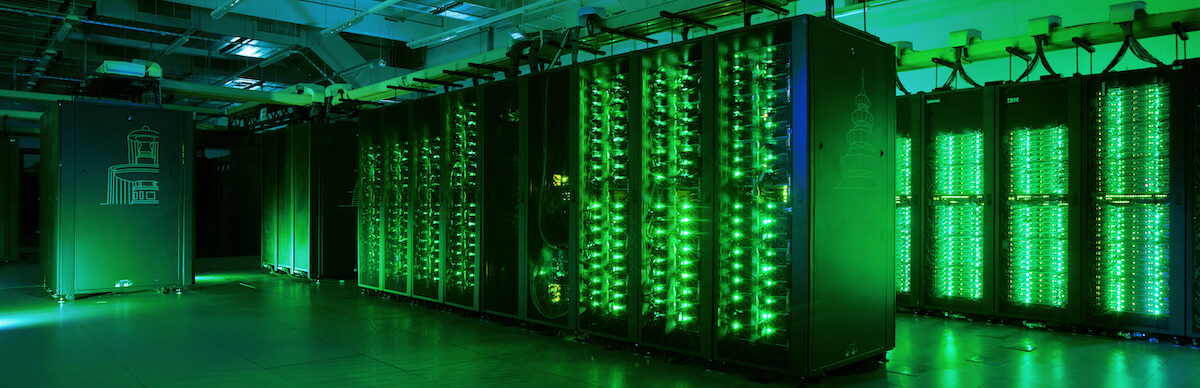
High-performance computing (HPC), artificial intelligence (AI), and quantum computing (QC) are essential tools for accelerating scientific discovery, engineering innovation, and decision-making across disciplines. From climate modeling and genomics over large-scale simulations and AI-driven analytics to quantum-enhanced simulations, these technologies continue to push the boundaries of what is computationally possible. However, the rapid growth of compute-intensive workloads has led to a dramatic rise in energy consumption, raising serious concerns around operational costs, infrastructure demands, and environmental sustainability. The rapid expansion of large-scale AI training and inference infrastructures, including GPU-intensive AI factories and sovereign AI initiatives, has further amplified the urgency of sustainable and energy-aware computing strategies.
These challenges are particularly pressing in Latin America, where the HPC and AI ecosystem is advancing rapidly, yet must operate within unique regional constraints—including higher electricity costs, limited cooling infrastructure, and sustainability priorities driven by environmental, social, and economic factors. As such, energy efficiency is not just a technical goal, but a strategic imperative for ensuring the long-term viability and accessibility of high-performance digital technologies in the region.
The “2nd Energy Efficiency and Sustainability in AI, HPC, and Quantum Computing” workshop at CARLA 2026 seeks to address this critical need by providing a dedicated forum for sharing knowledge, strategies, and best practices related to sustainable computing. It aims to catalyze innovation through dialogue among system architects, application developers, hardware and software researchers, datacenter operators, and policy makers.
The workshop will explore both foundational and applied aspects of energy-aware computing, including novel algorithms and architectures, software-hardware co-optimization, real-world monitoring and tuning approaches, and institutional or policy-level solutions. Special emphasis will be placed on case studies, experiences, and collaborative efforts originating in or applicable to the Latin American context.
By fostering a regional and international community focused on sustainability in HPC and AI, the workshop aspires to build bridges between emerging research and practical implementation—ensuring that performance, energy efficiency, and social responsibility evolve hand in hand.
Topics of Interest
We invite submissions on (but not limited to) the following themes:
- Energy-efficient algorithms, AI models, and foundation model training/inference
- Scheduling, orchestration, and workload management for energy and power efficiency
- Hardware-software co-design and optimization for sustainable computing
- Low-power, accelerator-based, and heterogeneous computing architectures
- Monitoring, telemetry, modeling, and benchmarking of energy consumption in HPC and AI systems
- Carbon-aware computing and energy-aware resource management
- Sustainable GPU computing and large-scale AI infrastructures
- Renewable energy integration and sustainable operation of data centers
- Energy-aware data center design, cooling technologies, and waste heat reuse
- AI-driven optimization of infrastructure energy consumption and operations
- Case studies and operational experiences from HPC, AI, and quantum computing infrastructures
- Sustainability challenges and operational experiences from AI factories and exascale systems
- Policy, governance, and educational frameworks for sustainable digital infrastructures
- Energy-efficient quantum computing systems and hybrid HPC-QC workflows
Submission Guidelines
- Guidelines: https://revistas.usfq.edu.ec/index.php/avances/about/submissions (Change language at end of webpage)
- Submission Types: Full research papers, experience reports, or position papers
- Page Limit: Minimum 6 / Maximum 15 pages (including references)
- Language: English
- Format: Microsoft Word or LaTeX using the ACI template
- ACI Submission Info: https://revistas.usfq.edu.ec/index.php/avances/about/submissions
- Review Process: Double-blind peer review
- Submission Portal: https://meteor.springer.com/carla2026
- Select Track: “Workshop: Energy Efficiency”
Policy on Originality and Generative AI Use
Submissions must be original, not under review elsewhere, and must comply with CARLA and Springer policies. The use of generative AI tools (e.g., ChatGPT, GitHub Copilot) is permitted only for improving language clarity—not for producing scientific content or experimental results. Any AI assistance must be disclosed in the final manuscript.
Plagiarism and self-plagiarism will result in rejection.
Workshop Format – Half-Day
- Keynote Talk (Latin America and international perspectives)
- Paper presentations (15 minutes each, with Q&A)
- Concluding panel discussion on future directions in sustainable HPC, AI and QC in the region
PROCEEDINGS
All accepted papers will be presented during the workshop and published in the CARLA 2026 Workshop Proceedings (Avances en Ciencias e Ingeniería (ACI)).
Workshop chairs
- Arthur Francisco Lorenzon – Federal University of Rio Grande do Sul, Brazil
- João Carlos Garcia da Cunha Barbosa – IT4Innovation @ VSB-TUO
- Maximilian Höb – Leibniz Supercomputing Centre, Munich, Germany